Phutún pouches on a wooden table, Gul Khatoon open with keys, a phone and scent inside

The line

Pouches

Phutún · A traditional handmade purse or a pouch.

Size
8 × 10 in, every pouch

The pieces

Hand cross-stitched pouches, each named after a woman from the history and legends of Gilgit-Baltistan. Hand-carried, no straps. A few are ready now; the rest are made to order.

In the Shina language, phutún refers to a traditional handmade purse or pouch.

Historically, a phutún was an essential part of the everyday wardrobe in Gilgit-Baltistan. While older generations paired these traditional pouches with clothing like the phiren (a loose woollen shirt) and the phuli khoi (a woollen cap), modern urban migration and shifting trends mean these original pouches are now frequently preserved as cultural artifacts or family heirlooms.

Gyal Khatun · 01

Two worlds, one thread.

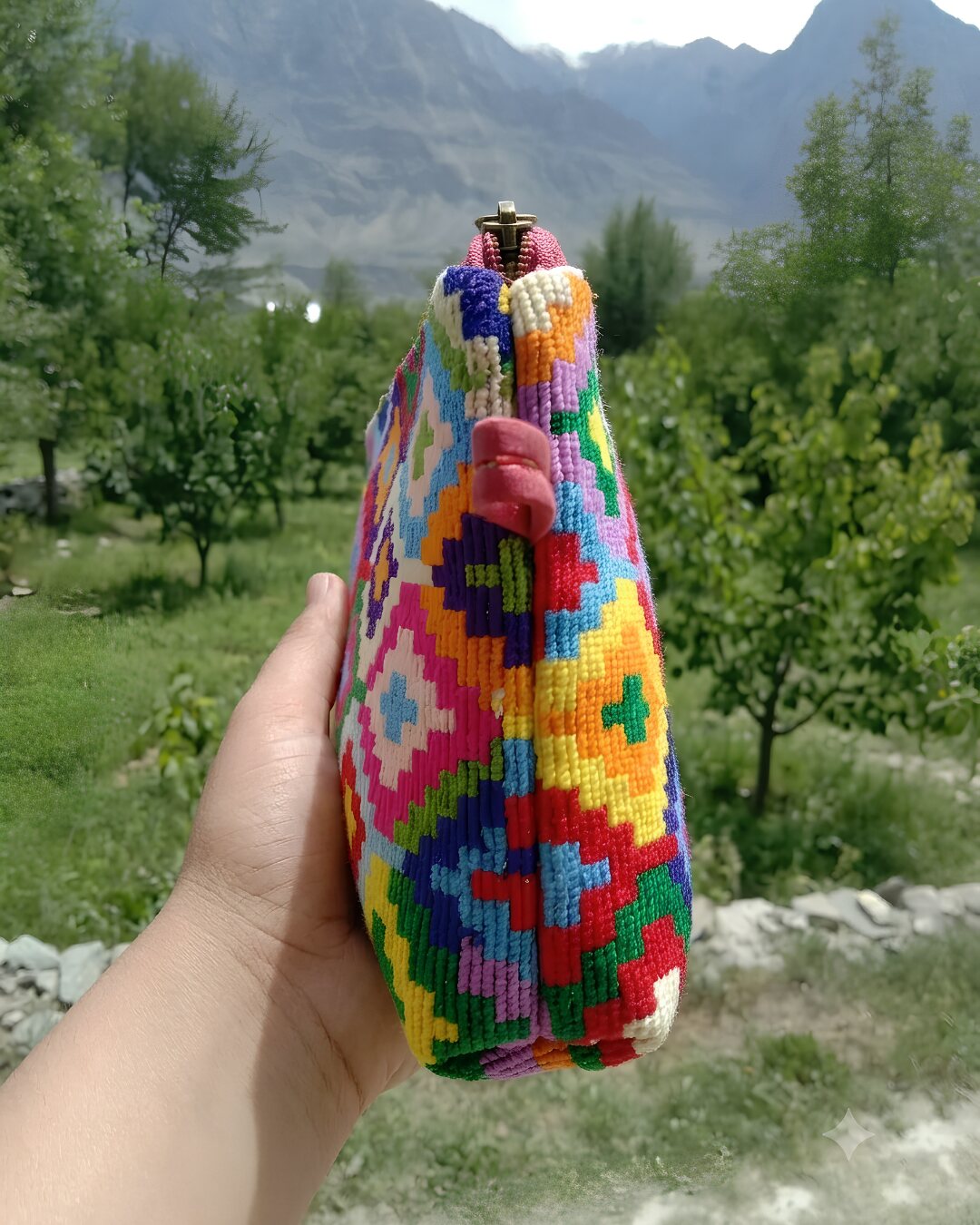
A Balti princess who married the king of Ladakh and carried her home with her, its music and its instruments. When the king died, she ruled until her son came of age, and he became one of Ladakh's greatest kings. She built for mosques and temples alike. Every colour in one grid, none of them cancelling the others.
Nur Bakht · 02

She knew where the fire was.

The story goes that Gilgit was once ruled by a cruel king, and only his daughter knew his secret: fire was his one weakness. She gave that secret to the people, and after he fell she ruled in her own right. Every winter, fires are still lit across the valleys in memory of that night. A pouch the colour of that fire.

Jawahir · 03

She brought the water.

Jawahir Khatun, remembered in Gilgit as Dadi Jawari, was the first woman of her line to rule there. She is remembered for the canals she built, carrying water for drinking and for the fields. Her name means jewels, but what she left behind was water. Steady, deep red, nothing wasted.

Gul Khatoon · 04

A fort made of flowers.

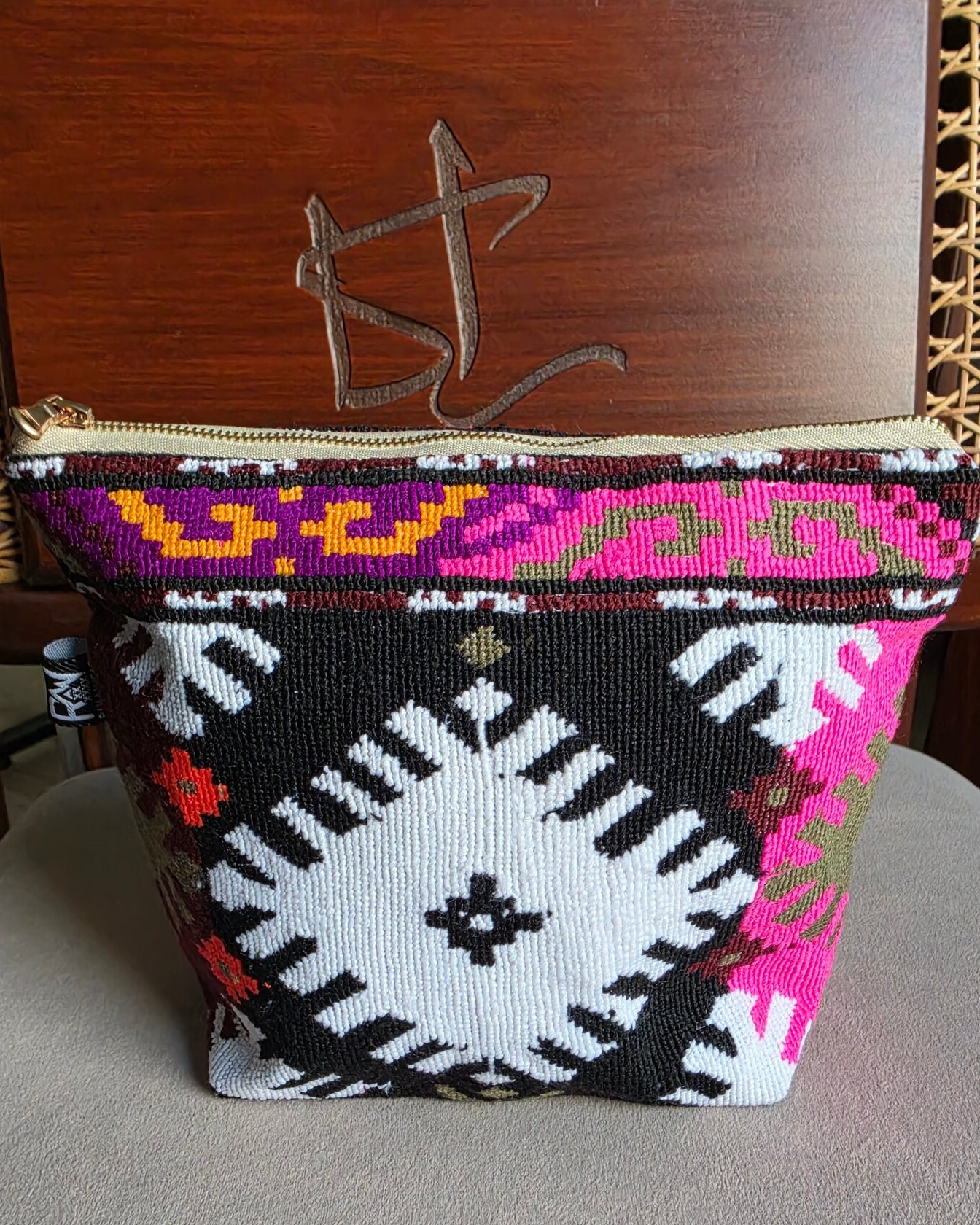
While her husband was away at war, she ruled Skardu and built Mindoq Khar, the flower fort, once surrounded by gardens. When the hill cut it off from water, she had a channel built to reach it, and local craftsmen decorated the palace by hand. Flowers and leaves on dark stone, the way she left it.

  • Gul Khatoon on a chair, the RAKA mark behind it
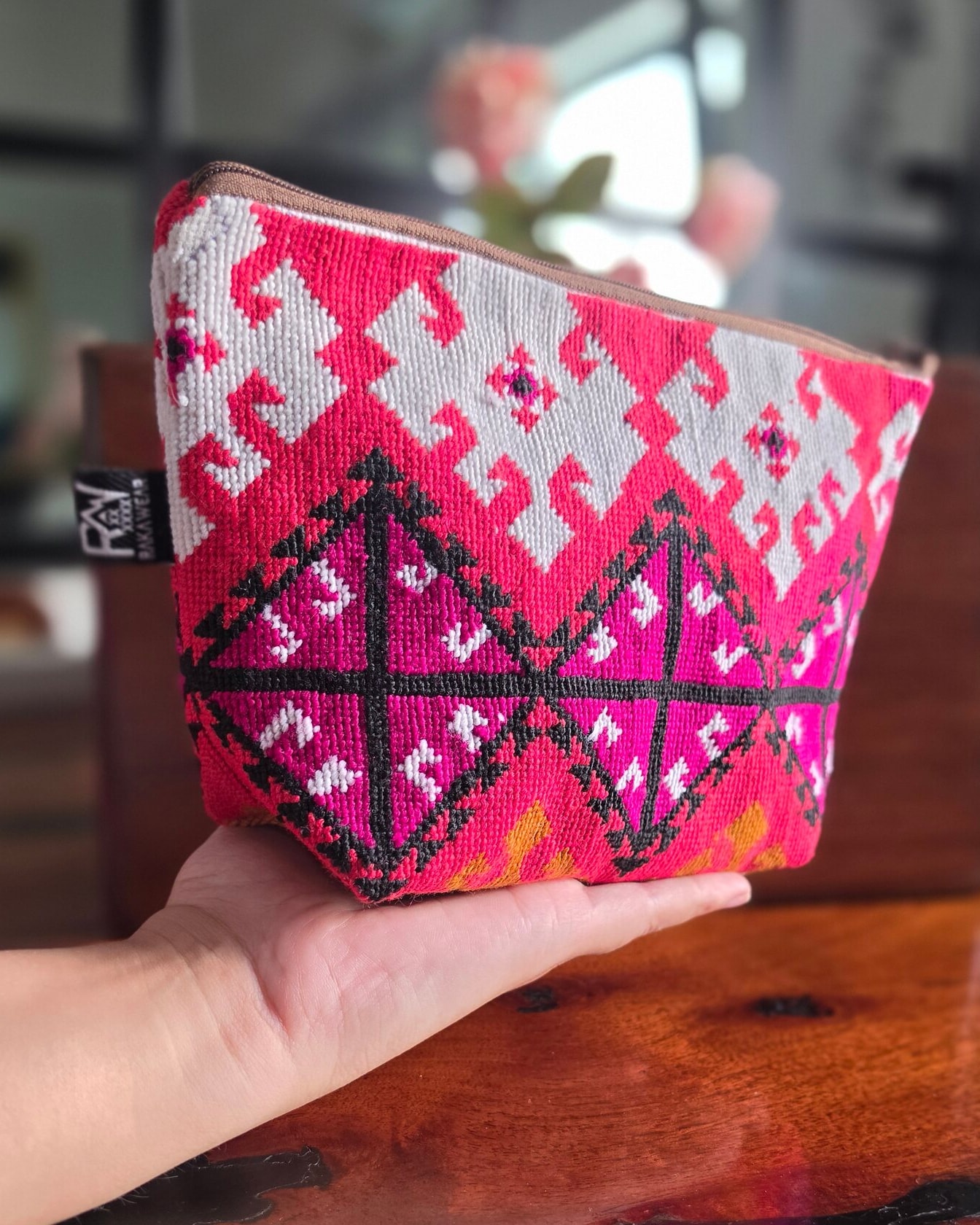
  • Gyal Khatun held in the hand outdoors: multicolour cross-stitch
  • Nur Bakht in the hand: pink and white, a band of diamonds